← Back to Portfolio
Product Design · Mental Health

Loop — A Clinical Approach to Social Anxiety

Redesigning a mental health app that uses evidence-based exposure therapy, habit-forming UX, and gamification to help users overcome social anxiety.
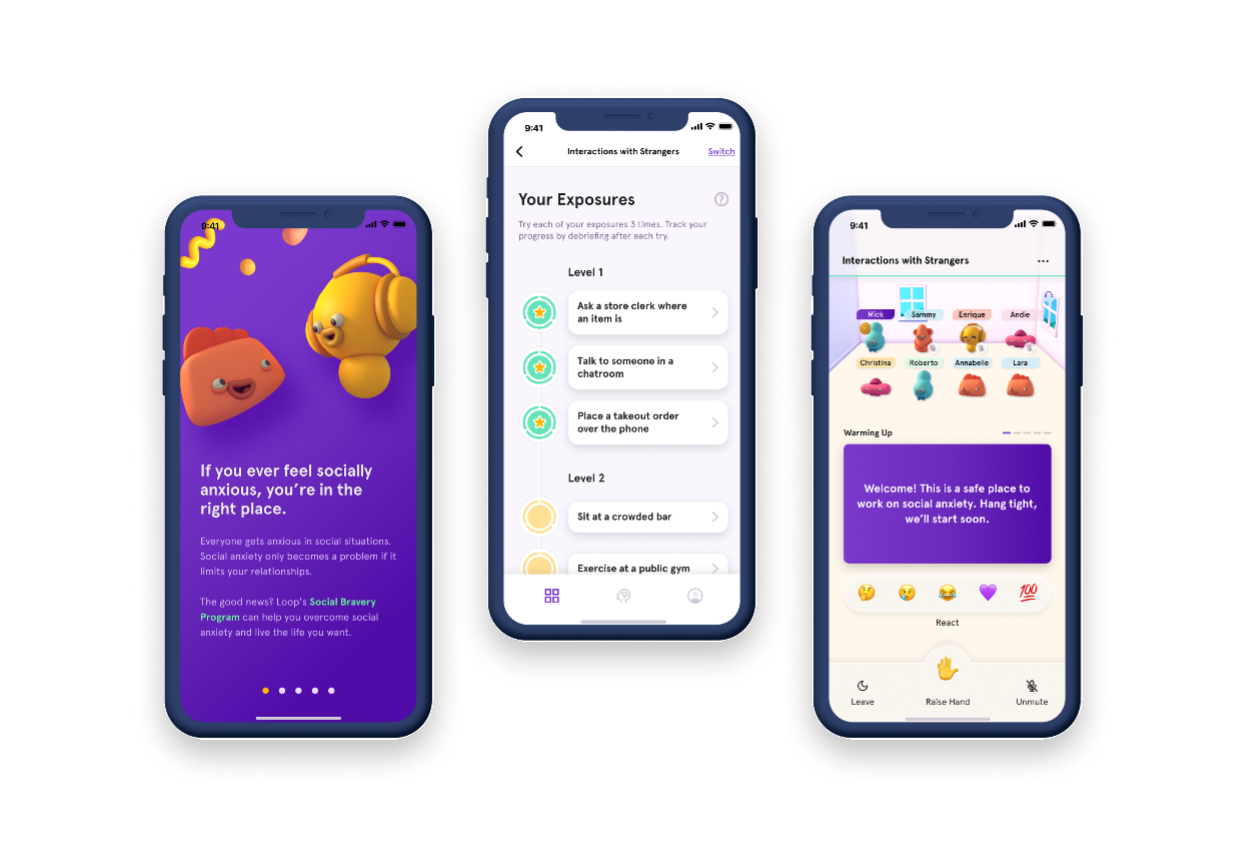
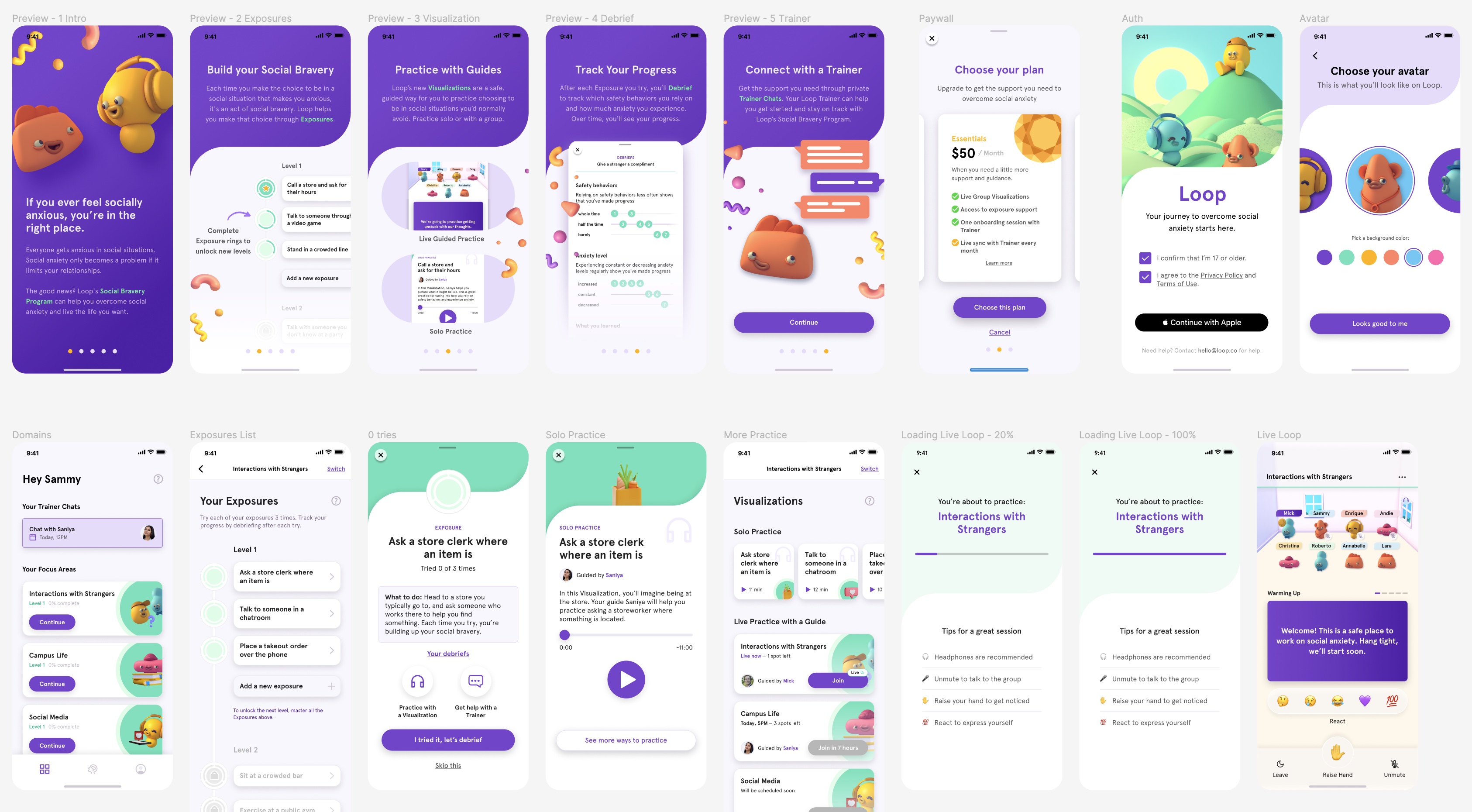
Loop app screens preview

Built Through Collaboration

Designers, clinicians, and engineers — all aligned around one mission.

🧭
CEO
Vision & product direction
📣
Head of Marketing
Growth & user acquisition
🧠
Director of Mental Health
Clinical oversight & program design
💜
3 Clinicians
Exposure therapy & content validation
⚙️
3 Engineers
Platform, infrastructure & video
2 Designers
UX/UI, research & prototyping
including me

Research

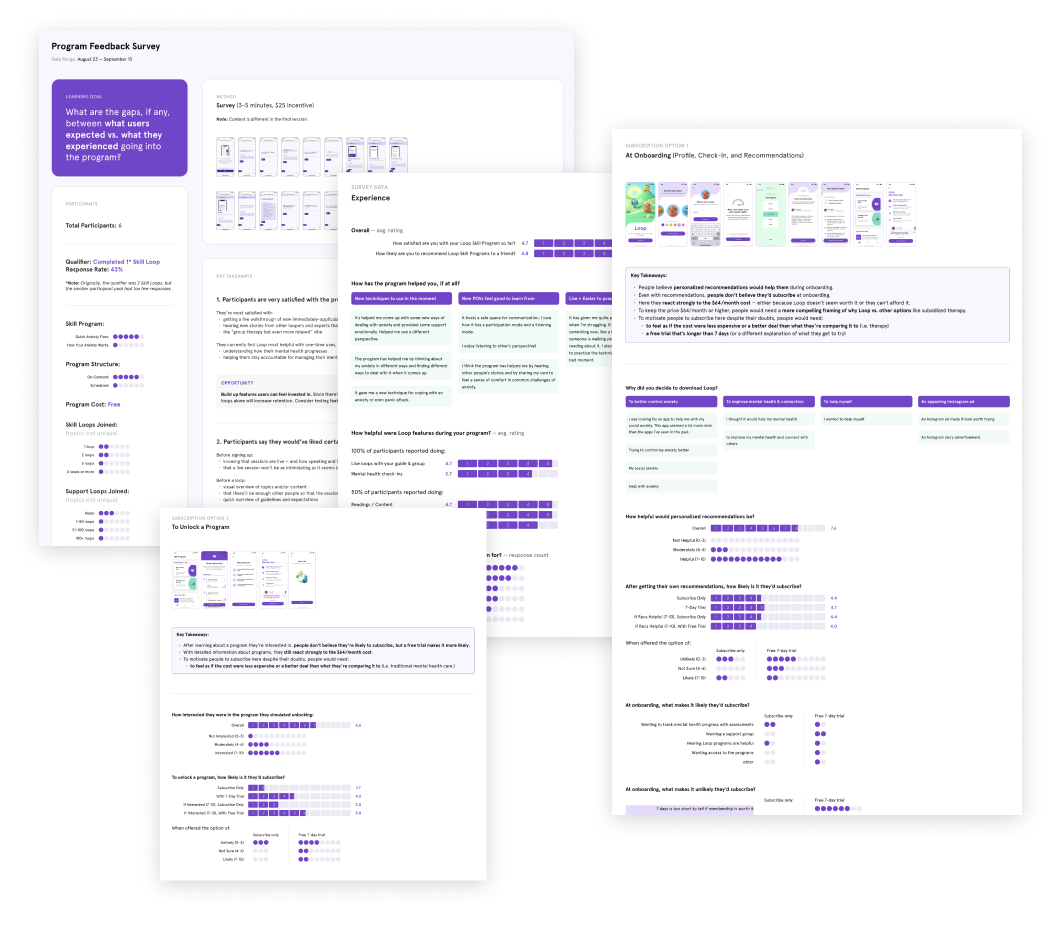
Upon joining the team, there was a trove of great research already done by the design and mental health teams.

My time here was spent reviewing reports, meeting with internal teams, and synthesizing the existing intel. The research covered user demographics, competitive landscape, and the clinical foundations of treating social anxiety.

The existing research gave us deep insight into our users' pain points — from avoidance behaviors to the daily impact of social anxiety on their personal and professional lives.

This foundation allowed me to skip redundant research and move quickly into strategy and ideation.

Existing research documentation

Discovery Workshops

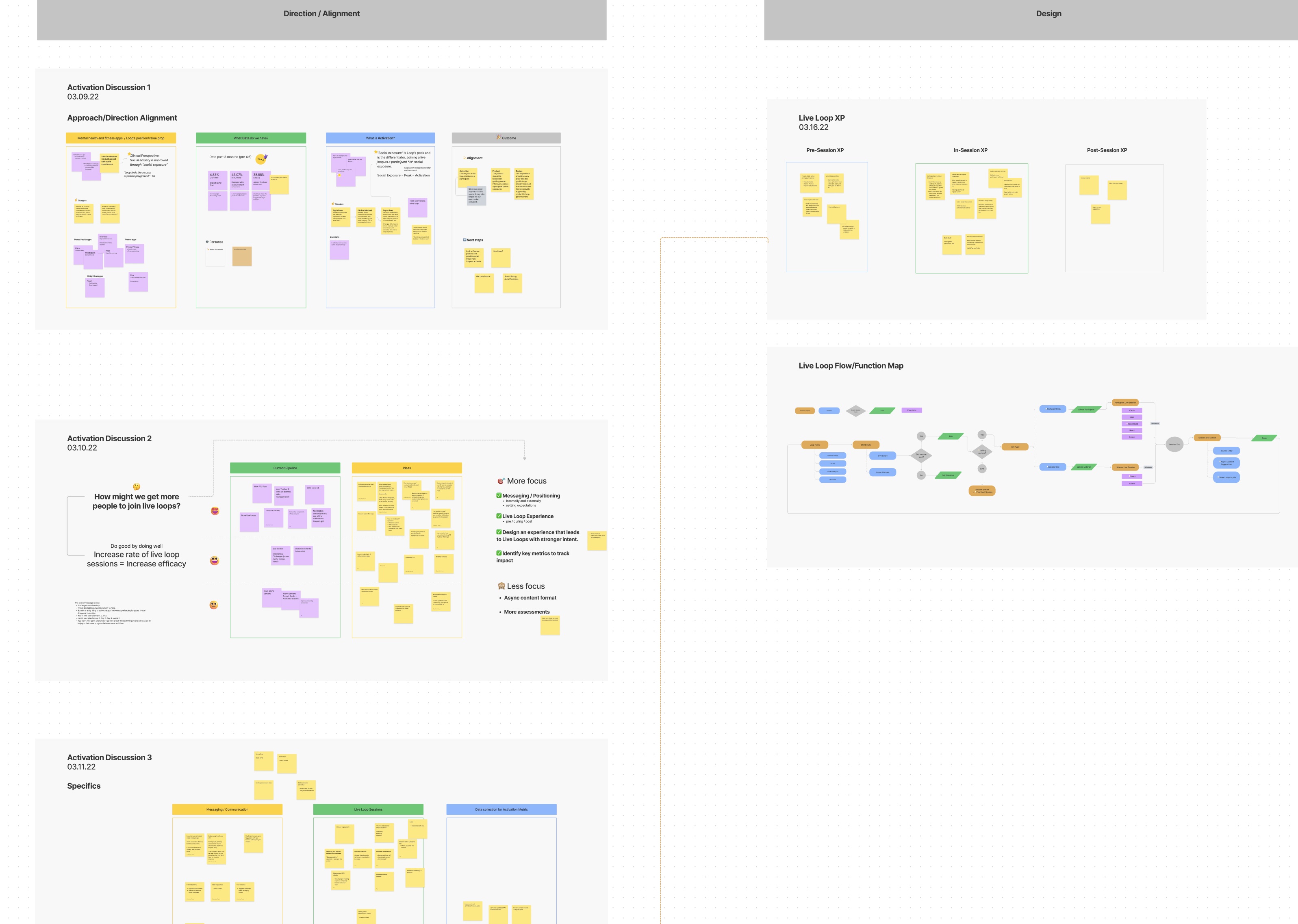
Identifying the core "AHA" factor through cross-functional collaboration.

Workshop session screenshots

I facilitated multiple rounds of remote workshops with key stakeholders to identify what the core "AHA" factor was for the app.

The main ingredient of the entire product was the clinical approach to treating social anxiety — which required the mental health team's approval. I worked closely with them to extract and focus on Exposures (putting yourself in socially anxious situations) and to build the entire experience around that.

This cross-functional alignment was critical — every design decision needed to be clinically sound while remaining engaging and accessible for users.

Developing A New Social Anxiety Program

Breaking down "Exposures" into trackable, measurable components.

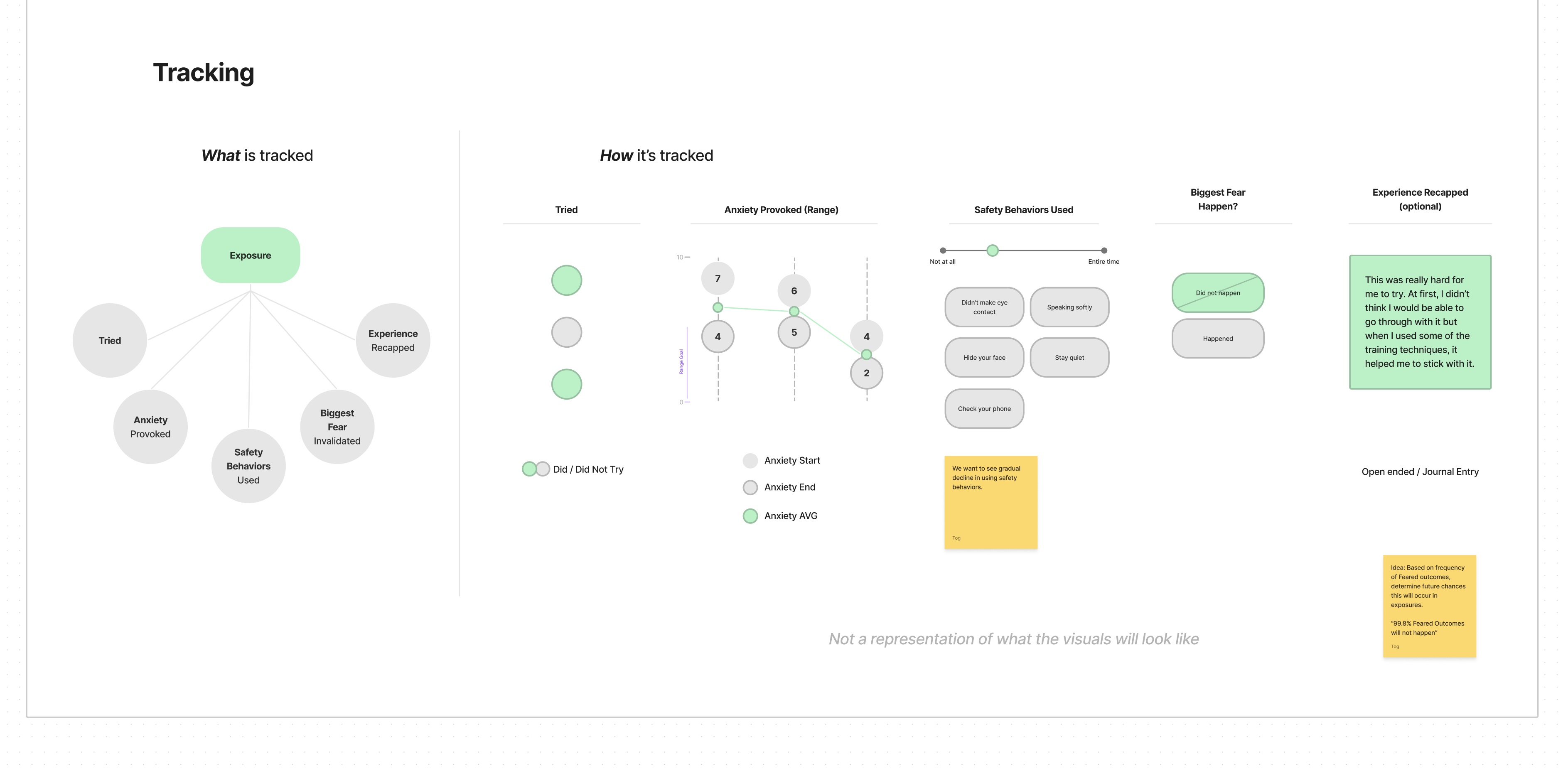
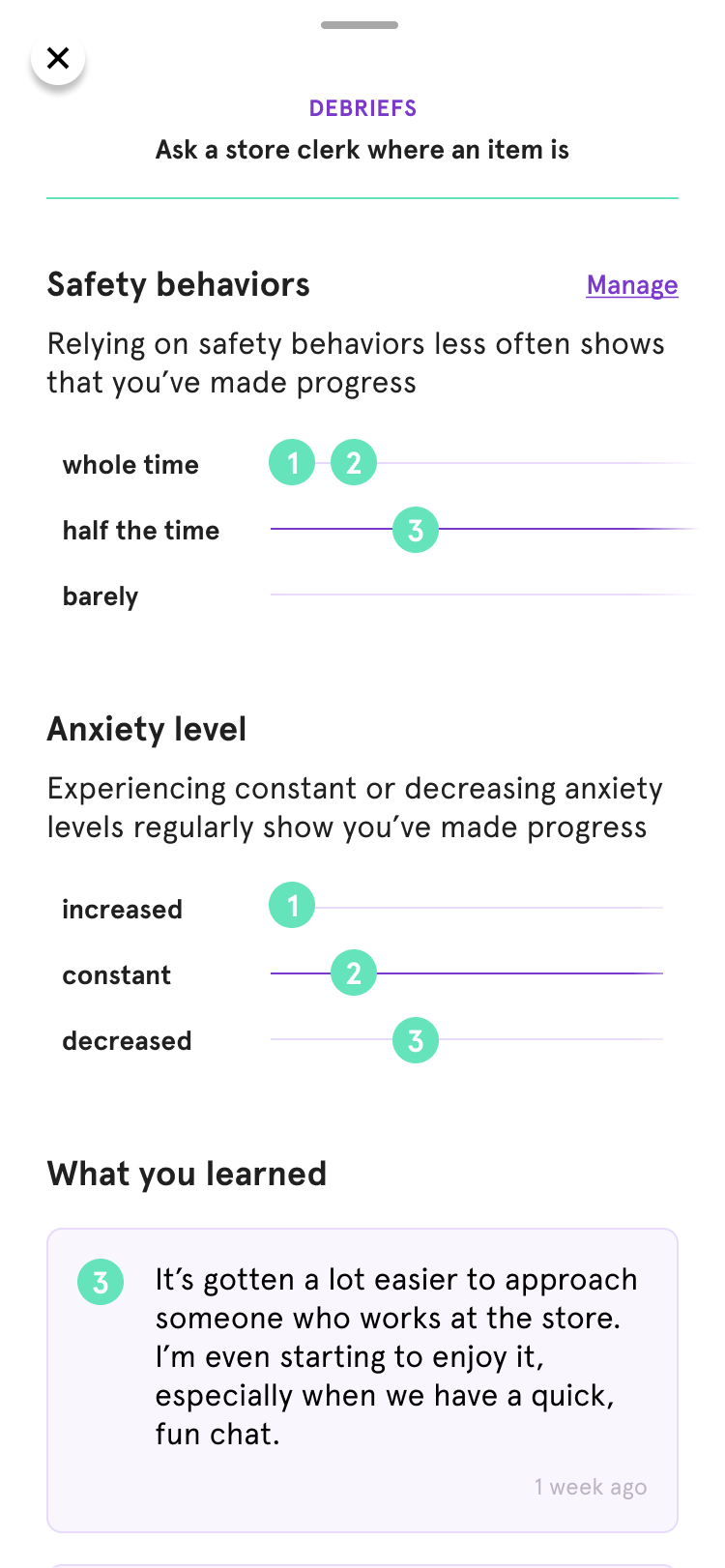
The next part in developing the new program, I worked with our Director of Mental Health to see what we could actually track. Understanding what makes for an effective exposure, I used those elements and designed trackable metrics that users would be prompted to log after completing each one:

  • Did they try it?
  • Was their anxiety provoked? (it must be uncomfortable)
  • Did they use safety behaviors? (break eye contact, look at phone, etc.)
  • Did their worst fear happen?
  • Reflecting on experience

Each metric was designed to be clinically meaningful while remaining simple enough for daily tracking.

Exposure tracking design
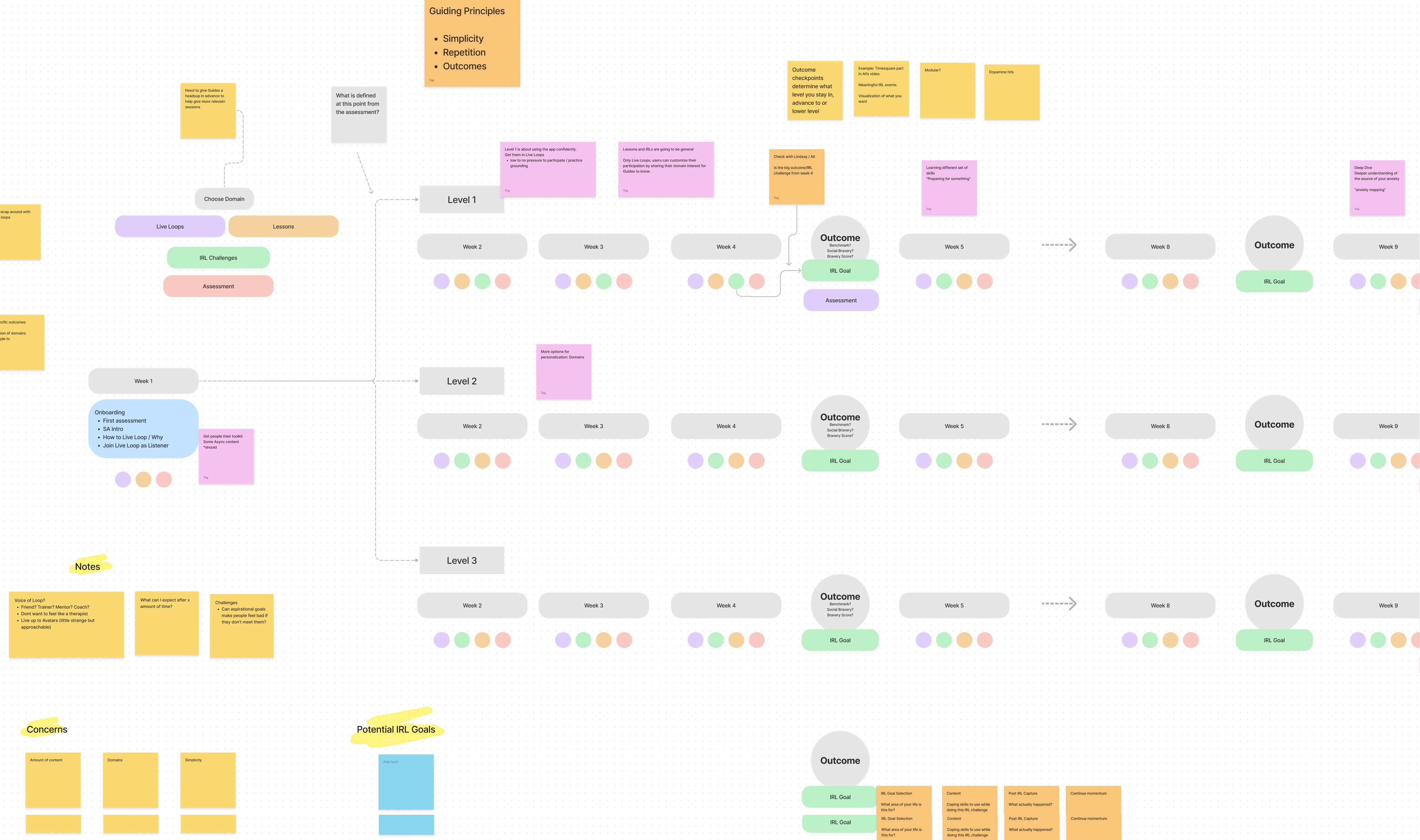
Information architecture

Information Architecture

I mapped out the entire user journey — from onboarding through the exposure program — ensuring that the flow felt natural and therapeutic rather than clinical and intimidating.

The architecture balanced structure (clinical requirements) with flexibility (users needed to feel in control of their own journey).

Reviewing Habit-Forming Apps

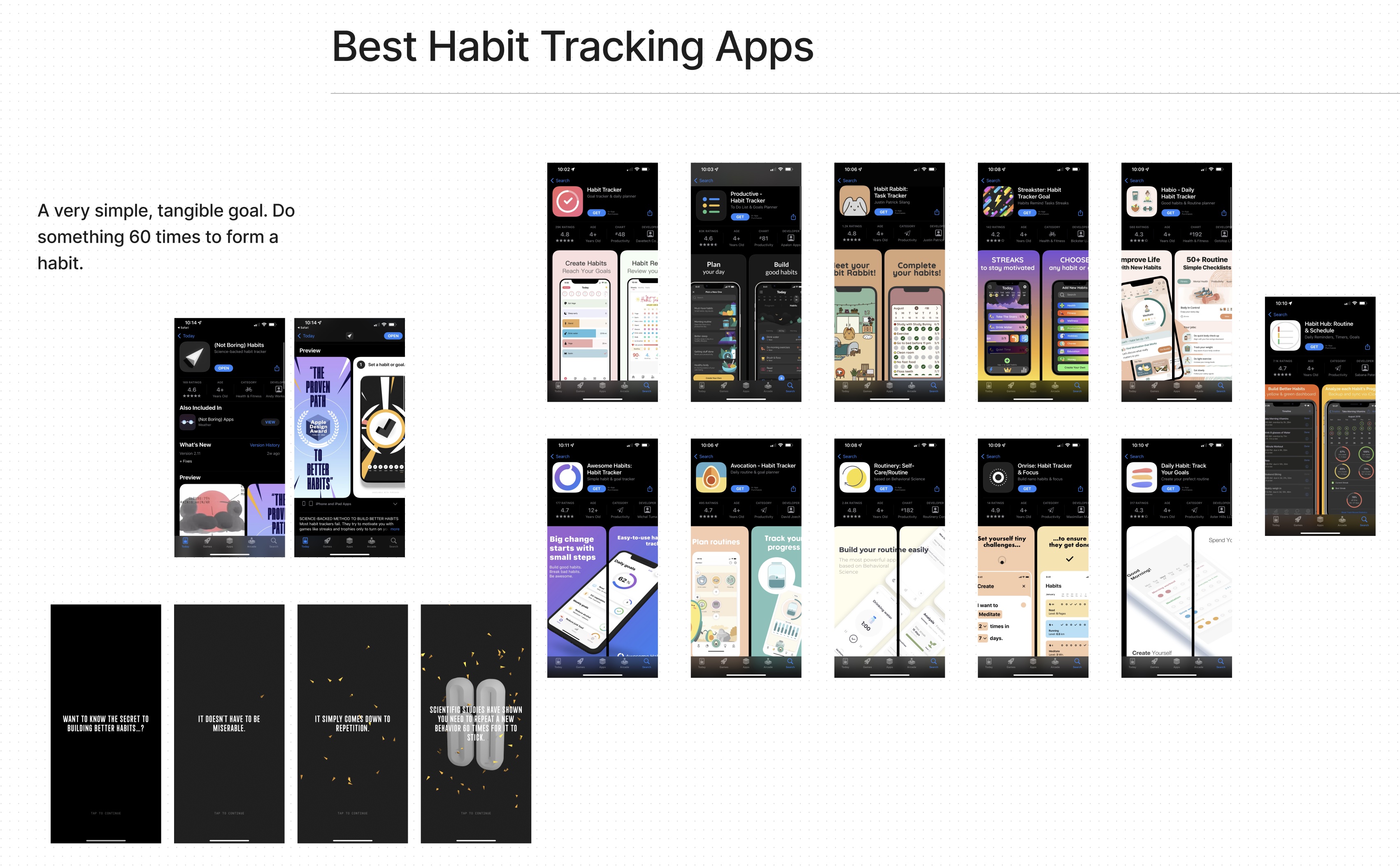
Doing exposures wasn't enough. It had to be consistent and sustained over time.

What this meant to me was creating an experience that formed habits. After researching a number of different approaches and concepts, the core patterns I recognized was creating an experience that encouraged repetition and provided the satisfaction of completing tasks.

I studied apps like Duolingo, Headspace, and fitness trackers — all masters at creating positive habit loops through streaks, progress visualization, and micro-rewards.

The key insight: users needed to feel a sense of accomplishment after each exposure, even when the experience itself was uncomfortable by design.

Habit-forming apps research
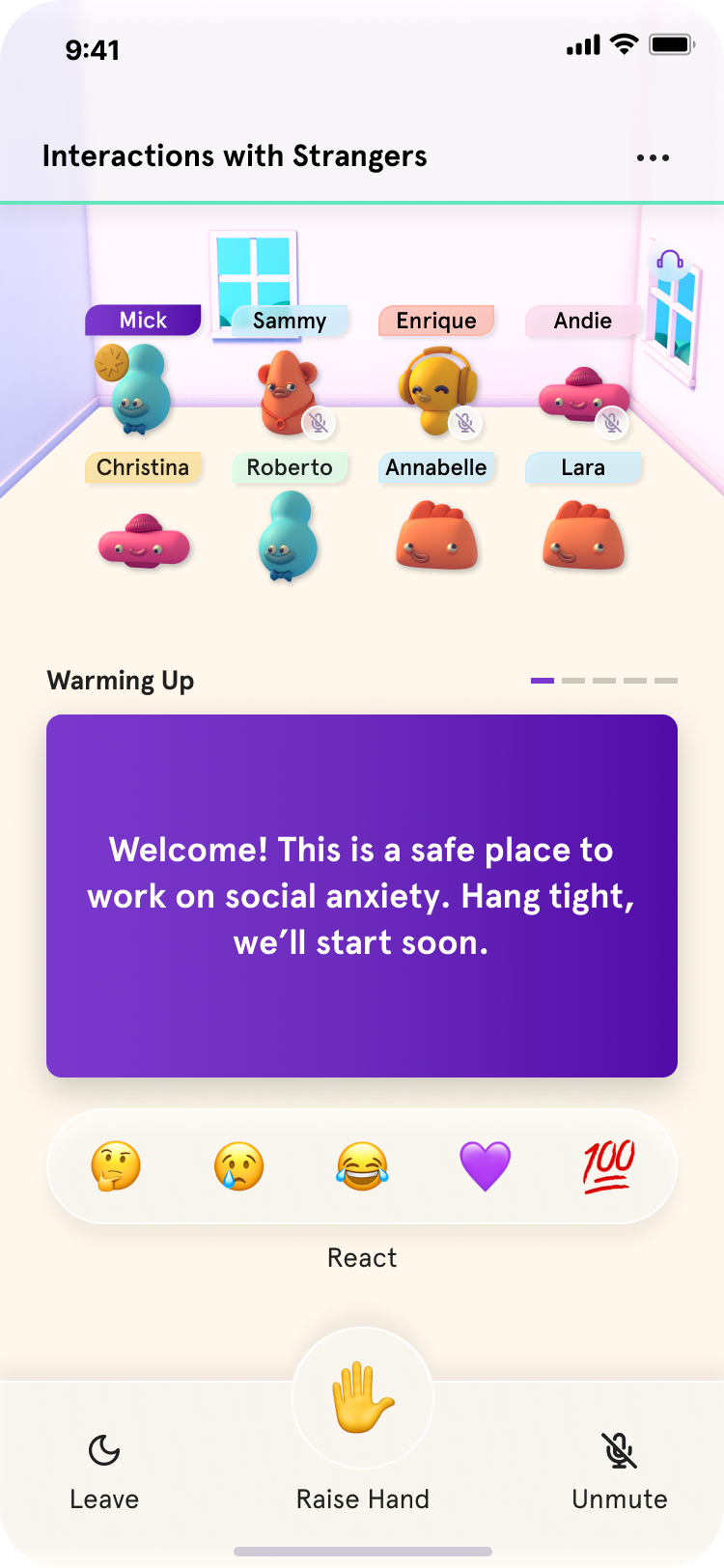
Gamification and repetition patterns

Gamified to Form Habits

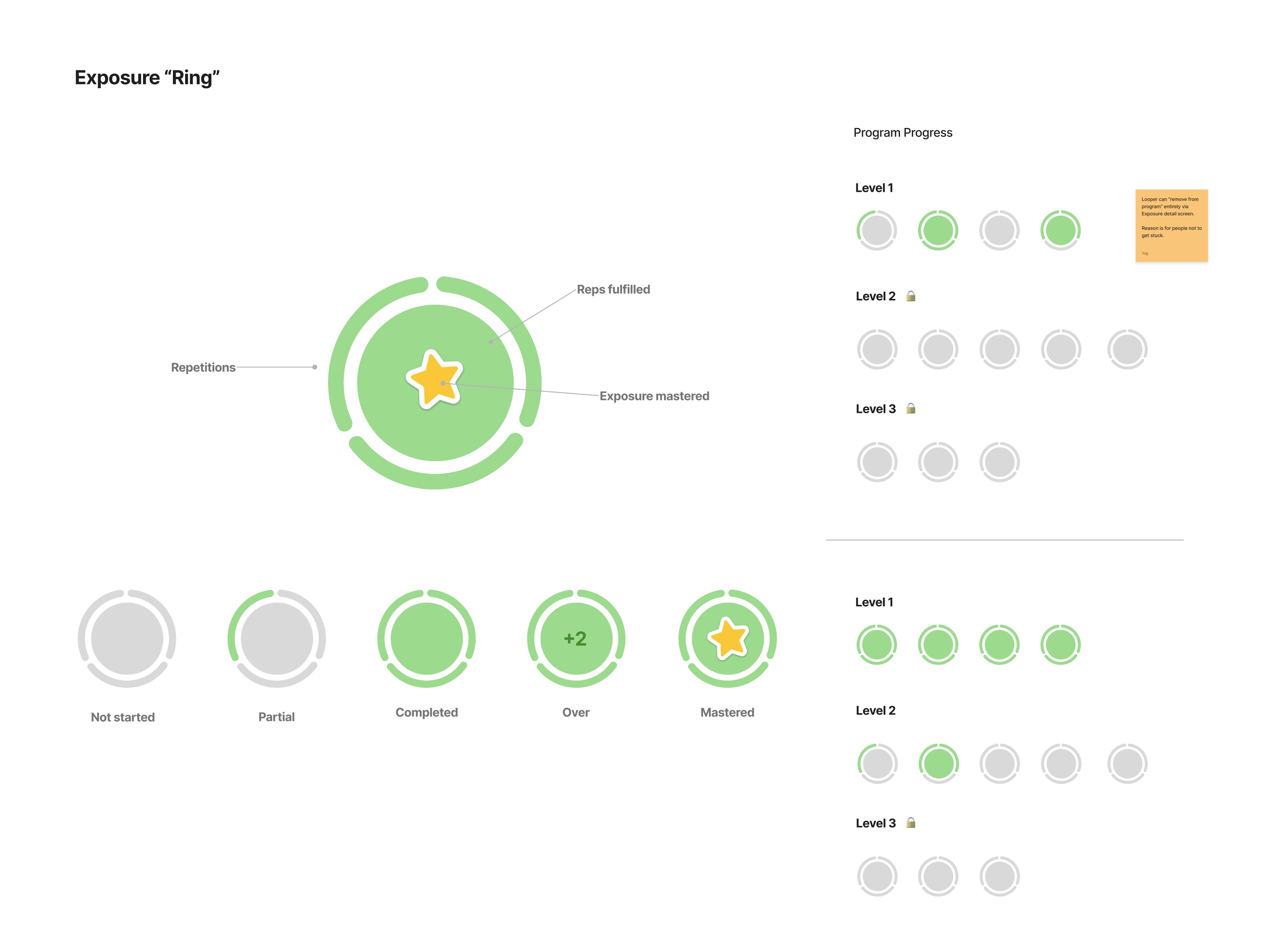
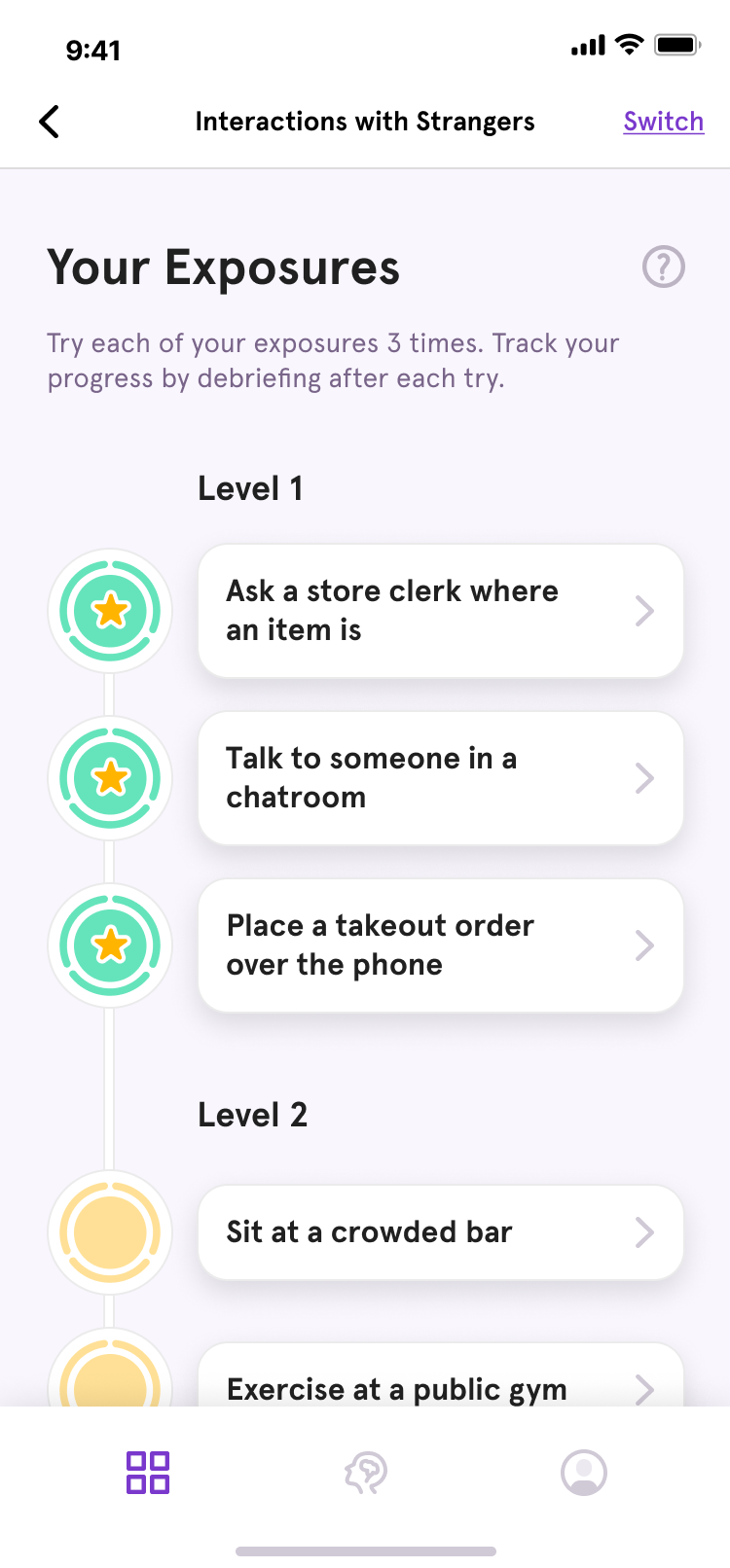
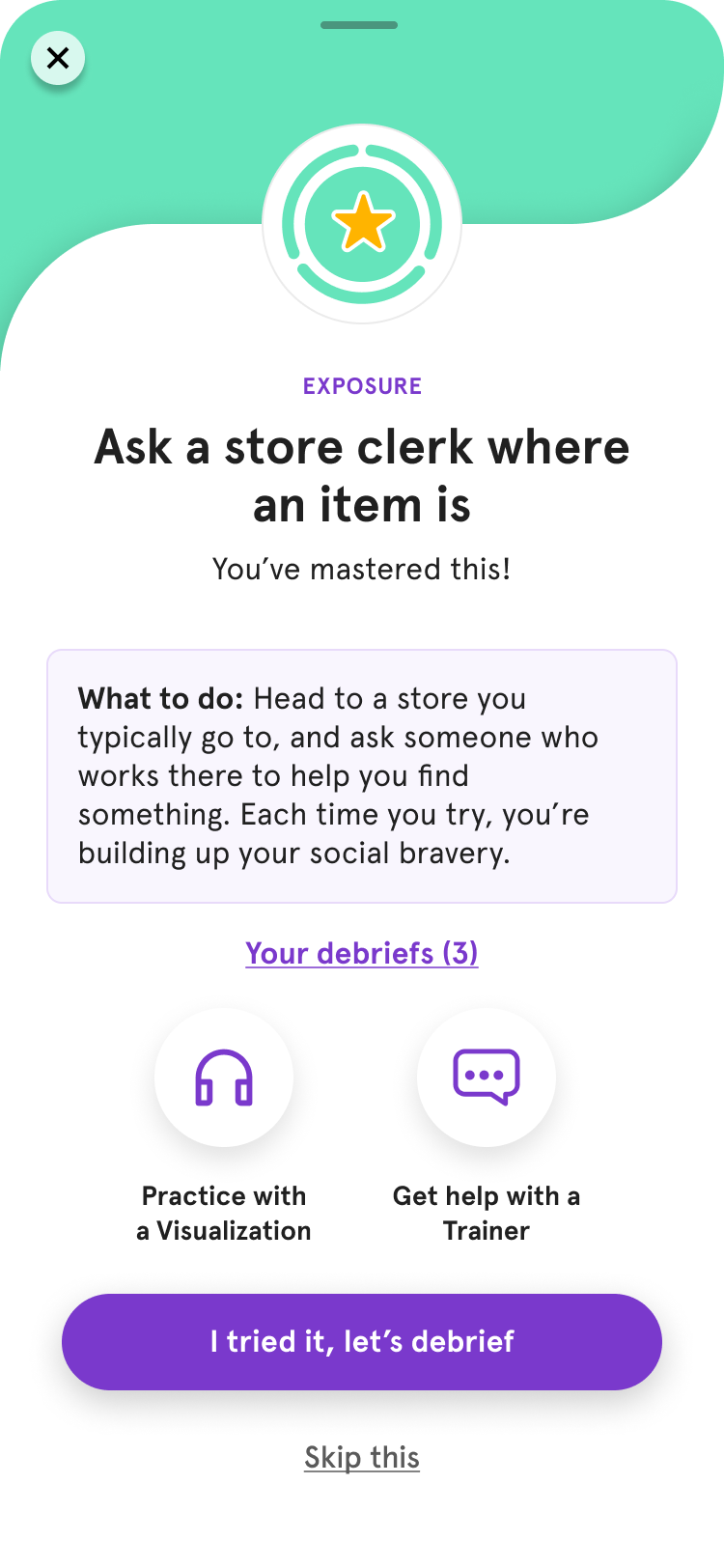
I designed a gamification layer on top of the clinical program — with streaks, progress rings, milestone celebrations, and unlockable content. This transformed the exposure therapy from a clinical chore into an engaging daily practice.

The balance was delicate: too much gamification would trivialize the therapeutic process, too little would fail to build the habits necessary for treatment success.

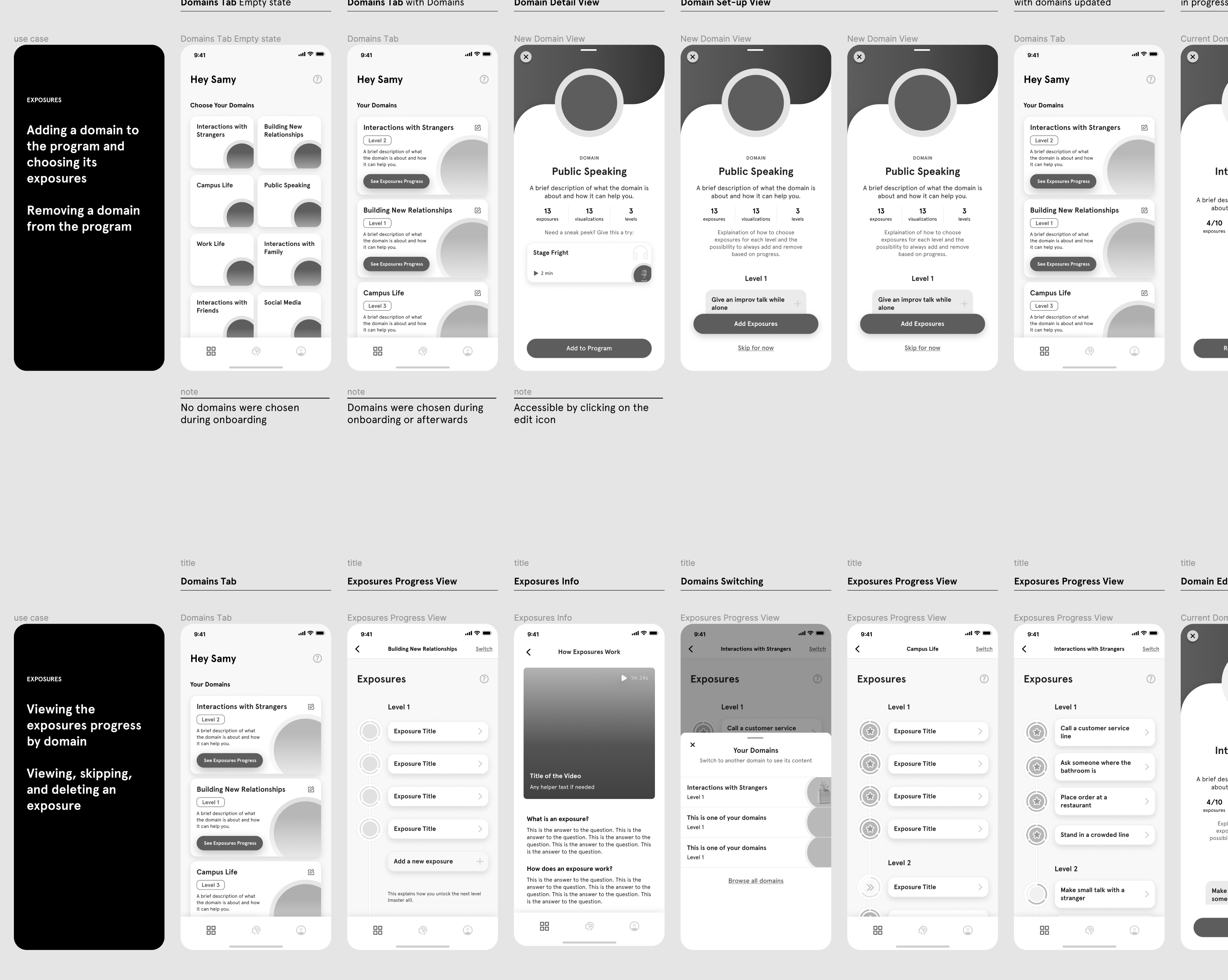
Wireframing & Prototyping

Translating the program structure into tangible user experiences.

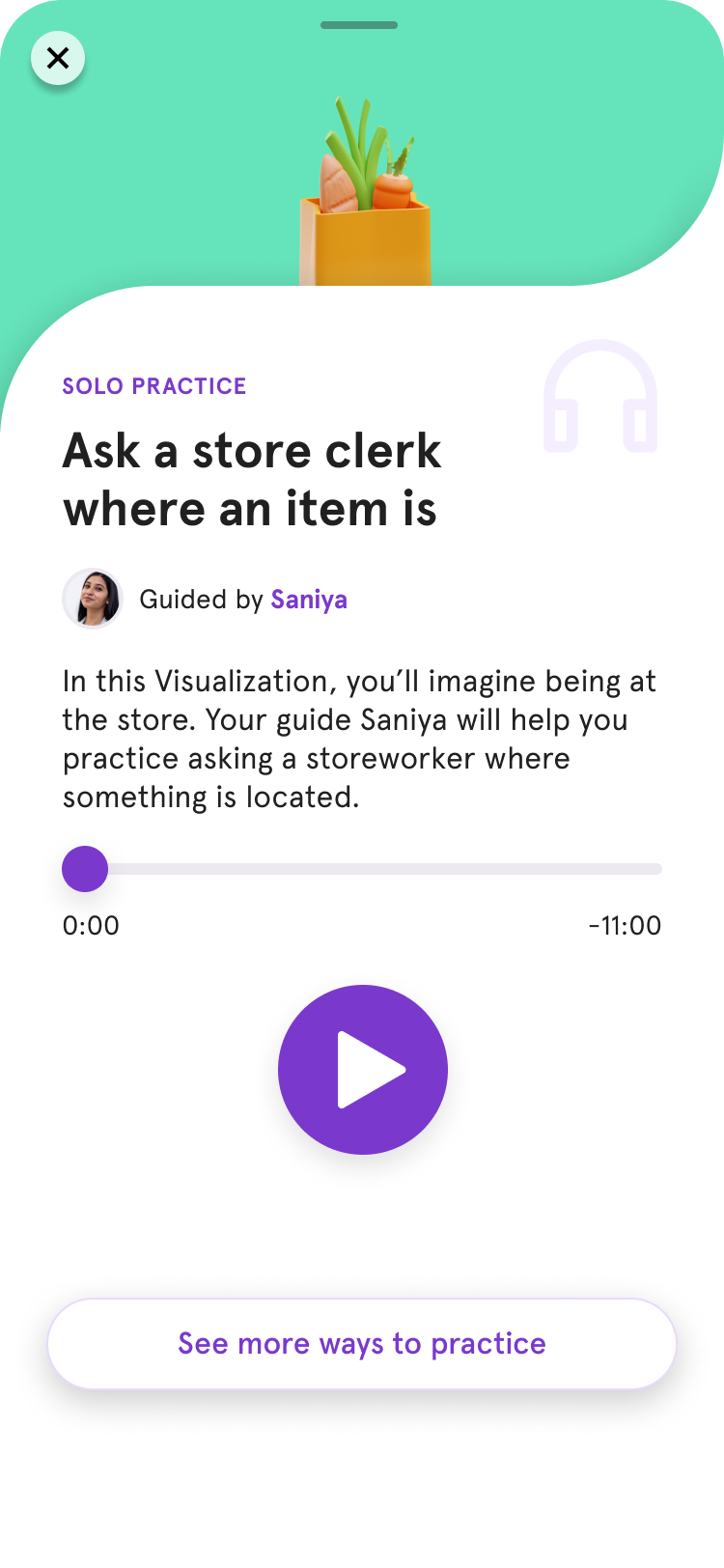
Putting It All Together

The final design — a clinically-grounded, habit-forming mobile experience for treating social anxiety.

Thanks for reading.

This project was a deeply rewarding collaboration between design, mental health, and engineering — creating something that genuinely helps people.